 What homeowners need to know about one of America’s most destructive invasive plants
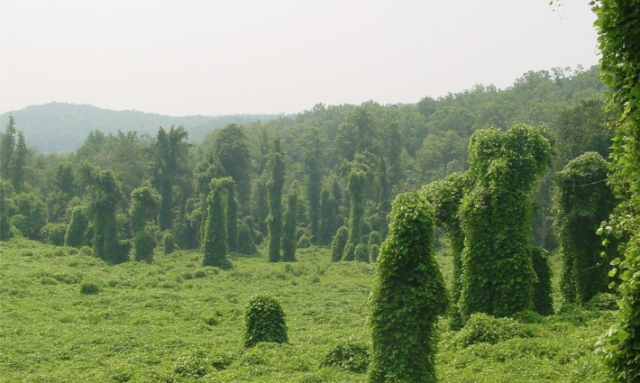
Kudzu (Pueraria montana var. lobata) is a fast‑growing invasive vine capable of overwhelming trees, shrubs, buildings, and entire landscapes. Often called “the vine that ate the South,” kudzu can grow up to a foot per day in summer and more than 60 feet in a single season. As the PRISM fact sheet describes, kudzu has “engulfed at least 7 million acres of public and private land,” forming massive blankets of foliage that bury everything beneath them.
In Fairfax County kudzu is not yet too prevalent, although there is an horrific infestation along the VRE in Burke and another in Occoquan Regional Park. [Insert other examples and actions taken if provided by committee members]
Once established, kudzu spreads relentlessly, forming impenetrable tangles that destroy scenic views, wildlife habitat, and property value.
Why Kudzu Is a Problem
- Smothers trees, shrubs, and groundcover
- Forms thick, woody vines that climb poles, fences, and buildings
- Creates dense shade that kills native plants
- Spreads aggressively across fields, forest edges, and roadsides
- Survives cutting, grazing, and drought due to enormous underground tubers
- Expands rapidly through rooted nodes that form new crowns
Kudzu’s underground tuber — sometimes 200–300 pounds — fuels endless regrowth even after vines are cut or grazed.
How to Identify It
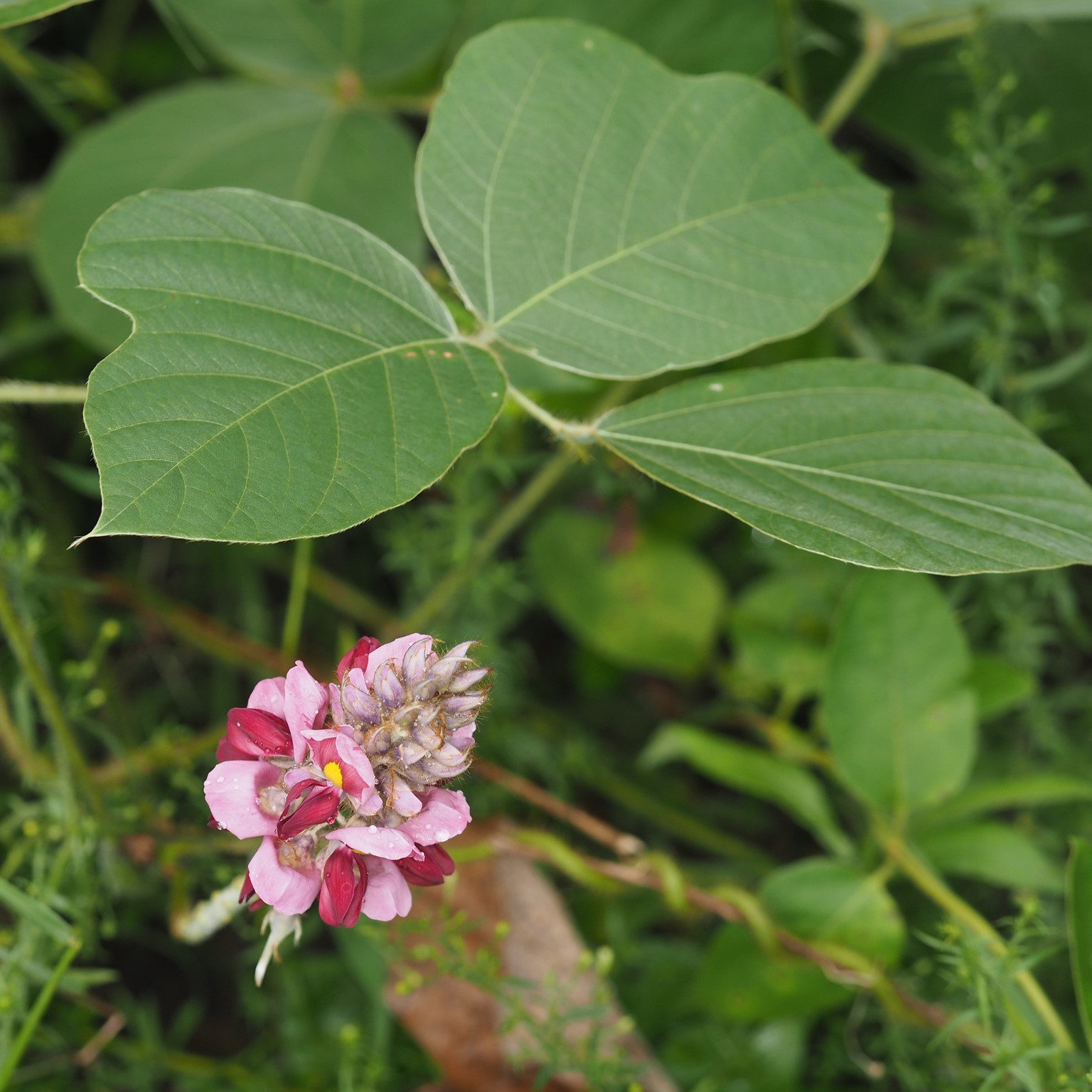
- Large, dark green leaves with three broad leaflets
- Leaflets often have rounded lobes and alternate along stems
- Hairy leaf undersides; young stems with golden bristly hairs
- Woody vines up to 4 inches thick
- Fragrant purple flowers in mid‑ to late summer (smell like ripe grapes)
- Flat, hairy seedpods with small kidney‑shaped seeds
In winter, kudzu vines appear leafless but remain draped over trees, poles, and structures.
Where It Grows
- Pastures and agricultural fields
- Forest edges, clearings, and tree‑fall gaps
- Roadsides, powerline cuts, and rail corridors
- Ravines, streambanks, and river edges
- Sunny disturbed soils of all kinds
Kudzu climbs trees, poles, fences, and even buildings, forming the infamous “kudzu sculptures” seen across the Southeast.
How It Spreads
- Vines root at leaf nodes, forming new crowns
- Massive underground tubers sprout dozens of vines
- Broken stems and seedpods float downstream
- Soil disturbance exposes new areas for colonization
Even when vines die back in winter, crowns and tubers remain alive and ready to resprout.
How to Control It
Prescribed Burning
- Works only for very young infestations
- Fire kills vines but not crowns or tubers
Grazing
- Goats, cattle, sheep, and pigs eat kudzu
- Must remove 80% of foliage continuously for 3–4 years
- Effective only on young infestations
Mechanical Removal
- Weekly cutting for 3–4 years weakens tubers
- Crowns must be located and cut above and below
- Severed crowns must be removed from the site
Cut Stump Treatment
- Apply concentrated herbicide to cut surfaces
- Best in late summer or early fall
Foliar Herbicide
- Apply twice yearly: early summer and late summer
- Thoroughly wet foliage on climbing vines
- Repeat for several years until no new growth appears
- Pea‑family‑specific herbicides preferred in forests and fields
After Removal: Restore the Site
Replant with native grasses and wildflowers and/or appropriate native shrubs to stabilize soil and prevent reinvasion. Monitor the site regularly and remove new sprouts promptly.
Source: Blue Ridge PRISM, Kudzu Fact Sheet